Showing posts with label 3 star. Show all posts

3 May 2015

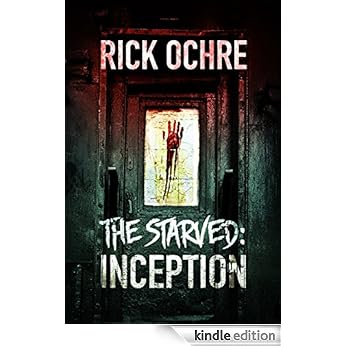
Review: The Starved: Inception by Rick Ochre


In The Starved: Inception by Rick Ochre two men, Carl Yoder and Hank Phipps are volunteers in an experiment into starvation. The experiment brought them closer together and changed their outlook on life – in more than one way.

Rick Ochre’s book is a solid read. It’s enjoyable and short enough to get through in one sitting if so desired, without feeling as if the story is rushed. The plot becomes clear quite early on, and despite one twist halfway through follows a predictable path. This is not necessarily bad – but to me was less of a horror/thriller because of this, as there were few thrills to be had, very little suspense or gore (aside from the obvious). This is not a book that is going to stop you sleeping – in fact I read it in a tent during a storm and didn't get as much as a goose bump. However the interesting psychological aspects made up for the lack of thrills.  

The Starved is let down by its length –at 151 pages it is more of a novella than a true novel, and whilst it doesn't feel like anything is missed out of the story it is disappointing that the author gets bogged down in pages and pages of describing the domestic arrangements of Yoder and Phipps, particularly the insecurities of Yoder’s wife. Whilst this adds depth to the characters, it doesn't add to the plot and is mildly offensive to women (although well in keeping with the time the story is set). These pages would, in my opinion, have been better spent adding in a little suspense.


The Starved: Inception is out May 4th and is available from Amazon.co.uk for £2.60.


[Review copy provided by NetGalley]

30 December 2013

Review: The Moses Virus by Jack Hyland


In sci-med thriller The Moses Virus, Dr Tom Stewart, a professor and trustee of the American Academy in Rome, stumbles upon an ancient virus, more deadly than the Spanish Flu and becomes the one man who can protect the virus from falling into the wrong hands.


I do like my deadly pathogen thrillers, and The Moses Virus certainly fits into this category, although is a bit slower than most novels in this genre, with a lot of focus being put on the history side of the story especially earlier on. Like many books since Dan Brown, there is a bit of an ‘evil Vatican’ sub-plot that will appeal to fans of that ilk. One of the highlights of The Moses Virus is that it is beautifully written and features well researched descriptions of modern Rome.
My big problem with The Moses Virus was that the plot is flawed, why is Dr Stewart the one to investigate the virus? There is a weak reason given in passing but it doesn’t really make sense. Neither does the fact the police and the Vatican seem completely happy to have him investigate seemly with very little official investigation going on particularly on the part of the police. Then there is the fact that he realises that there are people who will kill to find out what is going on and that he needs to be discrete but then goes any around telling all and sundry about the virus. Later in the book, he seems to manage to organise a cross border raid in very little time, with his only contact in government seemingly a Rome based director of the Laboratory for Communicable Substances. I realise that being utterly realistic wouldn’t work, but the lack of realism really bothers me and detracted from my overall enjoyment of the book.

Overall, an okay read which general fans of thrillers will enjoy, particular those who like a bit of history in the plot. Those who enjoy a bit more science in their thriller will probably be a bit disappointed with the lack of substantial science but The Moses Virus will still make for a pleasant afternoon’s read.

The Moses Virus is available in dead tree format from Amazon.com (January 7th) and from Amazon.co.uk (March 7th).

[An ARC was provided through NetGalley]

14 October 2013

Review: The Boy Who Was Born A Girl by Jon and Luisa Edwards


Based on the TV documentary of the same name, The Boy Who Was Born a Girl is the inspiring story of a mother and son coming to terms with gender dysphoria. When the documentary was filmed, Jon was just starting hormone therapy to develop more male characteristics. This book, written four years after the documentary, covers both the stuff seen in the documentary and the aftermath of the 'fame' and hormone treatment; as well as providing tips and reassurance to others in a similar situation.

Jon was born as Natasha in 1992, and spent most of his childhood feeling different to other girls, and experienced some social isolation because of this. At the age of 15, after having to deal with his mum's bipolar illness, his parents divorce, bullying and his grandmother's passing, he attempted to take his own life and was hospitalised in an adolescent mental health ward. During this time Jon explored his sexuality and gender identity and found solace in a community of other LGBT youth, and eventually found the confidence to come out as transgender. The later part of the book deals with some of the issues associated with being transgender, such as sexual relationships and starting hormone treatment, and Jon, here more than anywhere else in the book, comes across as a well adjusted, happy, mature twenty year old. The book ends with a tender, heartwarming letter from Luisa to Jon, that will bring a tear of joy to any eye.

The book is written with separate chapters written by Jon, and his mother Luisa, with them both offering different perspectives on events or periods of time in their lives. This is slightly off-putting at first, but the reader quickly gets used to the flips in narrator. The contents page makes it easier for those seeking information on a particular period of time to find that section; and there is a helpful glossary section for those new to the whole gender dsyphoria world.

Jon and Lusia Edwards
Overall, an informative quick read which will be of particular interest to those with gender dsyphoria and their families.

The Boy Who Was Born a Girl is widely available, including as a Kindle e-book at Amazon for £3.66.

27 September 2013

Review: Frozen Solid by James M. Tabor


Having thoroughly enjoyed The Deep Zone, I really wanted to like Frozen Solid, the second Hallie Leland book in the series. In Frozen Solid Hallie Leland is dispatched to Antarctica after her friend, carrying out research there, suddenly dies. Hallie is asked to take over the research with only a week to go before the research station is all but shut down for the winter. Almost as soon as she arrives people start dying. Will Haillie be able to find out the cause before everyone leaves?

The plot of the book was very much my cup of tea, and I did enjoy the idea of an outside group trying to control overpopulation in a ‘humane’ way but it all going wrong. The psychological aspects of the plot such as the isolation, the fear of being watched and the ‘accidents’, serve to heighten the tension, and I very much enjoyed this aspect of the book.

The character of Hallie Leland is well written and believable. She is strong, but not overwhelming so. She is intelligent but not all knowing, and there are some moments of weakness which add to the depth of the character. The characterisation of Hallie is a strength of Frozen Solid, and there are clear improvements to her character since The Deep Zone.   

Frozen Solid is not without its frustrations. As a fan of the more fast-paced thriller, and The Deep Zone certainly came under this banner, Frozen Solid was a bit too slow to get started for me. Things don’t kick off till over half way through. The first half of the book is a confusing kaleidoscope of different characters, almost random scenes and the author going off on tangents; this makes it quite hard work to follow and often left me feeling frustrated. It is a shame that while Hallie is very well characterised; the other characters are mostly unmemorable, which also contributes to the confused feel of the book, as you try to remember who’s who.  There is also frequent bad language, now I am not a prude and feel that using swearing can enhance the story if used correctly and sparingly, in this case it was not. 

The science is there for fans of Sci-Med, and in the whole is written in a way that shouldn't present a problem for readers who are not of a scientific or medical bent, although don’t expect the science to be explained every step of the way as it is in McClure or Crichton books. There are some more technical terms but one of the benefits of reading on a Kindle is that any terminology you don’t know can easily be looked up. Overall the science used is believable but there are some subtle mistakes – for example, the events are set in February and this is described as being dark and very cold, when in reality there is 24 hour sunlight and the temperatures at the South Pole are a more balmy -38°C rather than the -58°C found in winter.  I can see that having 24 hour near darkness is essential to ramp up the psychological tension, so why not set it during March-September during southern winter. It makes no sense to say February and then claim its winter, and it makes me wonder how well researched the book was.

Overall, a pleasant Sci-Med thriller that fans of the genre will want to read. Action/adventure fans may also want to give Frozen Solid a go but may be put off by the amount of science and the slow, confused start. This was a very hard book for me to rate as I did enjoy the story but it also frustrated me, I settled for a 3 in the end as I did enjoy it but would caution readers to be aware of some of the book’s issues before purchasing.  

Frozen Solid is available from Amazon for £14.97 for the Kindle Edition. 

[A ARC was provided by NetGalley] 

9 August 2013

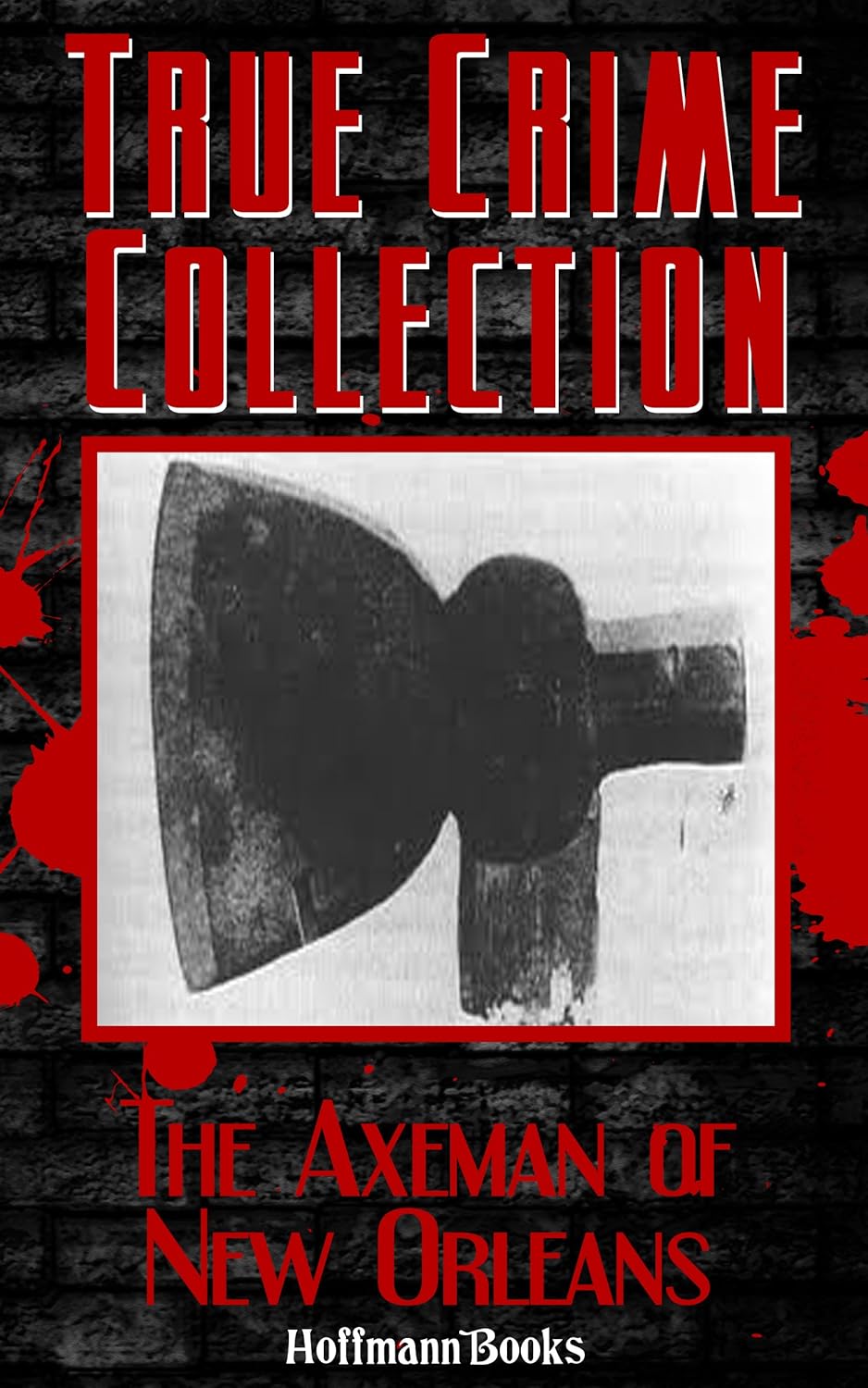
Review: The Axeman of New Orleans by Hoffmann Books


As you might have noticed I'm a bit of a true crime buff and I couldn't pass up the chance of reviewing a new book in a new 'True Crime Collection' from Hoffmann Books. The Axeman of New Orleans is currently one of three offerings in the collection and tells the events of 1918-1919 in New Orleans that left residents in a state of panic.

The city was gripped by a series of horrific attacks and murders, where an unknown man or men broke into people's houses while they slept and bludgeoned them with an axe. Whilst several suspects were arrested, the true identity of the Axeman was never discovered and the crimes stopped as suddenly as they started.

The book covers the key points in the case, and has a very professional and easy to read narrative. It goes through the murders 'as they happened' and discusses possible suspects and briefly covers how the police and justice system handled the investigation. However perhaps due to a lack of solid case material (as the murders happened nearly one hundred years ago), the book is incredibly short and lacks the kind of insights these books usually have, either from victim accounts or from speaking to detectives involved. There are also quite a few instances where events are not clear, for example, there is uncertainty over whether one of the victims survived the attack. Not necessarily the fault of the authors, but detracts from the book's credibility and overall reading experience. The book also fails to include a key suspect included in many other accounts of the case. I can see no reason for this, as the name and details of this suspect can be clearly found in earlier accounts of this case, but is absent from Hoffmann's offering.

Unfortunately for The Axeman of New Orleans, it suffers because of the age of the material it is addressing. Whilst the material Hoffmann books has got is presented very well and makes an interesting read, it is lacking in the real detail needed to make a true crime book a success. As with most true crime accounts the same material can be found in numerous places on the web, although The Axeman of New Orleans does provide it in a much more accessible format and is arguably better written. This book would be perfect for someone wanting a quick overview of the case, or as part of a bigger collection should Hoffmann Books extend their offering.

The Axeman of New Orleans is available from Amazon for £1.96, but can be borrowed free if you have Prime.

[A review copy was provided by the author]

28 December 2012

Review: Microsoft Surface as an e-reader


I was obviously a very good girl this year as Santa brought my Microsoft's new Surface tablet for Christmas. This review is solely about it's function as a e-reading device, a review of the tablet's other features will follow shortly.

Look and Feel

The Surface feels pleasantly heavy in the hand and the bevelled edges give it a quality feel. However as an e-reader the weight is a concern. It is difficult to imagine holding the device for any length of time, especially as it is wider than it is high, which makes holding it portrait style, like you would a traditional e-reader, difficult and uncomfortable. The Surface does come with the much-publicised stand, which means if you have a table and don't mind reading in landscape mode then the weight and dimensions become less of an issue.

Overall 2/5

Screen

The screen is bright, crisp and clear - although not as sharp as the iPad with it's retina display. I enjoyed viewing covers and illustrations on the screen, and did not have any issues with finger smudges on screen. However when reading a novel I had to give up after 10 mins as the backlight was hurting my eyes. You can turn down the screen brightness using the charms bar, but for me that didn't solve the problem. Reading magazines in colour was however a much better experience. The images and text appeared quickly, and there was less of a jarring lag when turning pages or resizing text than I get with my Kindle.

Overall 4/5

Apps

One of the first apps I downloaded was the Kindle app which is very similar to the Android app but obviously occupying a much bigger screen. The app works well and is quick and simple to use. I was quite worried about finding a decent app to read non-DRM EPUB files but there are several apps available for this purpose. I personally prefer Book HD, which is easy to use and has a very nice layout. I particularly like the option of having multiple shelves for different types of books - like collections on Kindle but with the ability of viewing covers. A big plus of using a tablet for e-reading is the ease of transferring books. The Surface comes with SkyDrive which is a cloud based storage system, you can also transfer via a full sized USB, download from your e-mail or web stores or use the micro-SD port. This is really helpful for me as I don't have to go via Calibre or mess around with cables.

Overall 5/5

Other Features

Whilst some people might like not to be bothered when reading, I don't mind it too much. With the Surface I quite like having Messaging running in the background whilst reading, which allows me to then chat to people when they come online, instead of having the laptop running and having to switch devices. It is a simple left to right swipe to change between your book and chat, and back again. The same applies to having music in the background, listening to audio books and browsing the web - all features in Kindle which don't function as well as they could.

For those who like to type notes into their books - this feature is still available in the Kindle app, although I haven't tried it in the other apps. The standard keyboard, much praised by Microsoft, takes a little time to get used to due to the lack of tactile feedback (it is much easier to type with the sound on) but once you get used to it works well; I type about as fast as I do on a normal keyboard and indeed wrote this post entirely using the Surface and it's keyboard. Much more ergonomic than the Kindle keyboard, particularly if you add a lot of notes.

Overall 5/5

Overall

As a device purely for e-reading, the Surface tablet has many attractive features but for me the weight and backlit screen mean I won't be getting rid of my Kindle just yet, as the reading experience for books is just not good enough. If you are more into magazines or comics then maybe this is a device to consider. That is not to say I don't like the Surface as a tablet device but for reading it just cannot compete with an e-ink device.

3/5

11 July 2012

Review: Confessions of a Male Nurse by Michael Alexander


Confessions of a Male Nurse follows in the footsteps of books like Confessions of a GP and Life and Death on the Streets to chronicle the real-life experiences of a male nurse while he worked in both the UK and New Zealand. The book is split into short chapters dealing with one patient or one setting, and this makes the book very easy and quick to read. Perfect if you don’t want to be tied to reading a book for several days; it’s also easy to put down and pick up again without having to go back over parts of the story.

Whilst I enjoyed reading Confessions of a Male Nurse, it wasn’t as humorous as I would have liked it to be, especially considering it’s marketed as “frequently hilarious”. There were some points when I had a little smile but nothing caused me to laugh out loud. There was also a lack of deep, emotional stories; at no point did I feel that the nurse was particularly affected by what he had seen on an emotional level. He did show frustration at the state of the NHS and some of the situations he was put in but if you are looking for a tell-all on the state of the National Health Service this isn’t the book for you.

Overall Confessions of a Male Nurse was an enjoyable quick read. I would recommend it if you like similar books in this genre or fancy something light to read but if you are looking for real humour or an expose, you are going to be left wanting.

Confessions of a Male Nurse can be purchased from Amazon UK for £2.99 or from Barnes & Noble for $4.99. 

22 August 2011

Review: Maddie - A Verdade da Mentira [The Truth of the Lie] by Goncalo Amaral

I don’t believe in banning books, unless they are written from a criminal wanting to profit from his crime, as such I was shocked to find out that Goncalo Amaral’s book, Maddie: The Truth of the Lie, written by an investigator who worked on the case, had been banned following a law suit by the missing child’s parents. As of October 2010, that ban has been lifted (see here) but the book still has not been published in English. As a follower of True Crime accounts, and having reviewed two previous works, mainly focussed on the abduction theory of Madeleine’s disappearance, I decided to read and review Amaral’s account of the investigation, which whilst following the various hypothesis that his team came up with during the investigation, settles on the hypothesis that Madeleine was accidentally killed in the apartment.


The book is written in such a way that you truly feel that you are following the developments of the investigation, only occasionally jarred out of this by a retrospective comment. You feel both the excitement and frustrations of the team at critical points in the investigation. It is also the only book on the topic in which I have found significant information on the case that I was previously unaware of, such as the descriptions of a man carrying a child away from the hotel by an Irish family. Amaral also addresses, indirectly, some of the questions and accusations raised in Danny Collin’s book Vanished: The Truth about the Disappearance of Madeleine McCann (review here).


One major downside to the book is the formatting and occasional use of strange sentence structures seen in the English translation. However, it is quite possible that this is due to the book being translated and copied onto the website, rather than errors in the original copy, but it is something to be aware of. There is also a factual inaccuracy in an early chapter where Amaral talks about the possibility of Madeleine being drugged by Calpol. In fact Calpol itself does not contain an anti-histamine as alleged in the book, and so does not have a sedating effect on children, which would explain the described confusion and denial by Kate McCann that Calpol could have been used to sedate the children. A form of Calpol called Calpol Night, which is not as frequently used in the UK as regular Calpol, does contain an anti-histamine so could make a child drowsy, through it would not truly sedate them. It is unknown if this inaccuracy, which is misleading and presented badly in the book, is due to a true error on Amaral’s part, a translating issue, or an attempt to deceive.


Amaral’s book is full of anti-British statements, not surprising considering that this was suggested to be the reason he was removed from the McCann investigation in the first place. The anti-British statements come in two forms, those directed at the police and politicians of the UK and those directed at English culture in general. The former are hard to verify, and revolve around the lack of information and cooperation given to Portuguese investigators, the latter, are quite offensive to me as a Brit, suggesting that British parent’s regularly drug their children and prefer to off-load them on others rather than looking after them themselves. These offensive statements seem to have evolved through both cultural differences and misinformation, although they perhaps do apply to the situation in question, they are certainly not true representations of British parenting and Amaral should not have generalised in this way. I have to admit these statements where quite off putting for me as a reader, and distracted me from the point of the book, I fear this could be particularly distorting and distracting for those who are unaware of British culture, and could misinform their views of the case.


Overall, a detailed and compelling account of the investigation into this tragedy. All hypotheses’ are covered, according to the importance given to them by the original investigation, and evidence is explained clearly and linked to each hypothesis. I was surprised at the number of times that Amaral acknowledged the shortcomings of the investigation, almost in a apologetic way, and although there is a clear prejudice developing near the end against the McCann’s, the book is definitely less bias than the other two accounts I have read, and the accusations are justified and backed up, although sometimes minimally, by evidence.


It should be noted that this review is based on an English translation by Anna Andress and not the bound, published version of the book.

25 July 2011

Review: Lethal Remedy by Richard L. Mabry

When patients who received an experimental drug, the only cure for a deadly infection, start falling ill weeks after treatment, a team of doctors at the Southwestern hospital must find out how the drug is causing these illnesses. But there are those who do not want the truth discovered and will stop at nothing to ensure the experimental drug goes to market.


The plot of Lethal Remedy is enjoyable but unremarkable, with no major twists and turns that make a good thriller, instead the plot is quite transparent and really as a reader you are following the diagnostic and treatment process, rather than figuring out a gripping puzzle. Mabry has missed many opportunities to build suspense in the plot and the result is that there is no sense of urgency or danger, even at major plot events where these feelings should be in evidence; this is perhaps due to the focus on the mundane details. The ending of the book is also a let down, with a quick, unsatisfying ending that is wrapped up all too neatly in the epilogue, with a unbelievable ‘tell all’ moment from the main antagonist.

On the other hand, Mabry characterises well, and as such the reader can empathise with the characters and they are, in the main, believable. There are several sub-plots involving the characters that develop during the story, but these tend not to be fully explored or concluded, such as the cause of Sara’s nightmares, which promise more than they ever deliver, and leave a reader feeling let down.

As with Mabry’s Diagnosis Death, there is a very strong Christian theme throughout which at times is jarring, more so than in Diagnosis Death. I personally would have preferred the characters to take more responsibility for their decisions rather than leaving it up to God and whilst I understand that Mabry is a Christian writer, I feel the novel would have worked better with the religious theme still intact but downplayed. Elsewhere in the plot there are references to Christian ideals, including in the naming of the killer bacteria as Staph luciferus, which I thought was a nice touch. Also like Diagnosis Death there is a romantic sub-plot that is included, although this time it was much less of a distraction, but again made it a more cozy novel than in traditional thrillers.

Overall an enjoyable but disappointing outing for Mabry. The lack of suspense meant that whilst the book had a thriller plot, it just didn’t read like a thriller, although it was no less gripping. The book is saved by excellent and believable characterisation. The detail in the novel makes it a must read for medical thriller fans, although they may be disappointed at the lack of suspense. In addition the discussion questions at the end of book are a nice touch for reading groups, particularly those of a Christian nature.

Lethal Remedy by Richard L. Mabry is due for release on the 30st October and is currently available from Amazon UK to pre-order for £8.09 in paperback form; it is also available from Amazon US for $11.19. Readers can also pre-order from Barnes and Noble and WH Smith. It is very likely that Lethal Remedy, like Mabry’s other offerings, will be made available on Kindle as well but if you would like to ensure this please let the publisher know, either through Amazon or directly via their website

Note: The previous books in the series were released under the name Richard Mabry, but this one is under the name Richard L. Mabry, which can lead to issues when searching for the book online.

[An ARC was provided by Abingdon Press]

27 June 2011

Review: The Enemy of an Enemy by Vincent Trigili

The Enemy of an Enemy by Vincent Trigili is a sci-fi space adventure which follows protagonist Vydor through his encounters in the Empire. It is intended to be the first in a series of three novels by Trigili set in the same universe. 


From Amazon

"Everything seemed to be going Vydor’s way, until the Dragon Claw was sent on a rather unusual assignment to investigate a minor incident deep within the Empire’s space. That would send Vydor down a path filled with fantastically powerful enemies and extraordinary friends that would obliterate everything he ever understood to be true and threaten the very foundations of the Empire itself."


First impressions are not good but the cover is very misleading, it gives the impression of a cheap and trashy sci-fi outing, when in fact it is an entertaining read, with a well-developed plot. Whilst the plot is good, the book is severely let down by it's simplistic, often child-like, writing style, which means that it reads more like a Young Adult book rather than the adult fiction it is. Hopefully this will be improved in the rest of the series. The simplistic writing style is countered by the brilliant pacing of the novel, particularly near the start, which makes this a sure page-turner.


The Enemy of an Enemy is available from Amazon UK for just 69p and from Amazon US for $1.13. It is also available in print from Lulu for £6.33.

Related Posts Plugin for WordPress, Blogger...